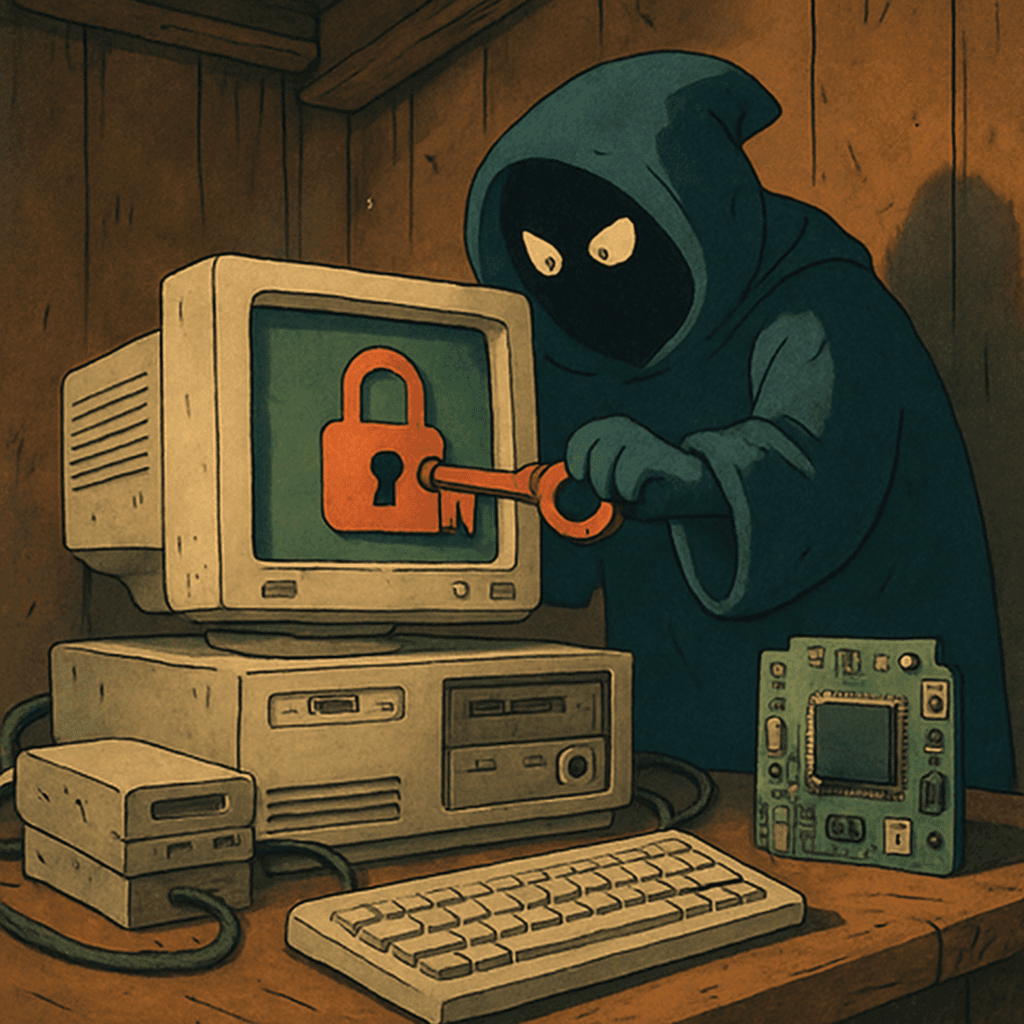
In today's rapidly evolving digital landscape, many organizations and individuals continue to rely on outdated hardware for critical operations. While using legacy systems might seem cost-effective or convenient, it poses significant security risks that are often underestimated. This long-form technical blog will explore how old hardware can introduce new threats—including hardware backdoors, default credentials, unpatchable vulnerabilities, and real-world exploitation techniques—to your cybersecurity posture. We'll also provide practical scanning commands and code samples for detecting risky hardware in your environment, making this guide useful for both beginners and advanced users.
Organizations often continue operating legacy servers, routers, desktops, embedded devices, or consumer electronics beyond their intended lifespans. Reasons range from "if it isn’t broke, don't fix it" mentality, to budget constraints, or needing compatibility with outmoded software.
However, outdated hardware becomes a security liability due to:
Old hardware’s architecture, firmware, and embedded security rarely match today’s attack landscape. This allows threat actors to exploit vulnerabilities at a level that’s invisible to traditional software security defenses.
A hardware backdoor is a deliberate or accidental flaw in a device’s physical design, allowing bypass of security mechanisms. Unlike software-based malware, hardware backdoors can be inserted at manufacturing, supply chain, or firmware stages, and are extremely hard to detect or remediate without replacing physical components.
Backdoors can exist in:
Security researcher Jonathan Brossard demonstrated (The Hacker News, 2012) a hardware-based backdoor (Rakshasa) that replaces the system BIOS/UEFI with a compromised firmware, achieving stealth persistence. Once installed, malware can:
In 2018, Bloomberg reported that Chinese supply chain tampering allegedly inserted malicious chips into Supermicro motherboards used by major U.S. companies, potentially enabling remote backdoor access. While still controversial, the revelations highlight global supply chain risks.
Today, leading CPUs from Intel and AMD incorporate low-level management engines such as Intel Management Engine (IME) and AMD Platform Security Processor (PSP):
As discussed in the r/privacy subreddit:
Modern Intel and AMD processors allow remote access via hardware and have the deepest level of permission, that can allow remote kill switches...
Rakshasa, by Brossard, is notable for being:
Technical summary from the Hacker News article:
"...the backdoor enables the attacker to remotely access the compromised system at will and even reinstall malware after a full system wipe."
Jonathan Brossard’s Rakshasa BIOS Backdoor - Presentation Slides
Legacy hardware (routers, printers, cameras, IoT, and industrial devices) often ship with:
Attackers frequently scan for these exposed devices. Search engines like Shodan can locate connected devices with open telnet/SSH/http admin ports, and anyone with the default credentials can log in and gain control.
Firmware is often:
A flaw in old firmware can let attackers take complete control with little effort, and vendors frequently lack upgrade paths for such devices.
When hardware reaches "end of life," vendors drop support:
Attackers can develop public exploits (nowhere else to hide), knowing devices can't be fixed.
The Meltdown and Spectre CPU bugs disclosed in 2018 highlighted how fundamental hardware design can introduce universal risk. These vulnerabilities allowed attackers to:
Patches for some chips were simply not possible, particularly for older processors lacking microcode update mechanisms. Older devices remain permanently exploitable.
Other unpatchable flaws:
To identify the hardware and check vendor, model, and firmware version:
sudo dmidecode | less
List PCI/USB devices, including network controllers:
lspci
lsusb
Enumerate CPU support and discover microcode age:
cat /proc/cpuinfo
dmesg | grep microcode
Query the current BIOS/UEFI version:
sudo dmidecode -t bios
Locate all devices on the network that may have default credentials or outdated firmware:
nmap -sV 192.168.1.0/24
Scan for common default credential ports (http/telnet/ssh):
nmap -p 22,23,80,443,8080 192.168.1.0/24
curl and wget):curl -s http://<device-ip>/ | grep -i firmware
#!/bin/bash
echo "Collecting BIOS information..."
sudo dmidecode -t bios | grep -E 'Vendor|Version|Release Date'

echo "Detecting CPU..."
cat /proc/cpuinfo | grep -E 'model name|flags' | uniq
import nmap

nm = nmap.PortScanner()
nm.scan('192.168.1.0/24', arguments='-sV -p 22,23,80,443,8080')

for host in nm.all_hosts():
    print("Host : %s" % host)
    for proto in nm[host].all_protocols():
        print("Protocol : %s" % proto)
        ports = nm[host][proto].keys()
        for port in ports:
            service = nm[host][proto][port]['product']
            version = nm[host][proto][port]['version']
            print("Port : %s\tService: %s\tVersion: %s" % (port, service, version))
On identified devices, use hydra to check for default credentials:
hydra -L users.txt -P passwords.txt <device-ip> http-get
Warning: Only use on devices you own or have authorization to test!
As we've explored, old hardware is not just a performance bottleneck—it is a security powder keg. From hardware backdoors, default credentials, and unpatchable vulnerabilities, to the realities of modern and legacy exploitation, outdated devices undermine your security posture at the deepest layers. Attacks exploiting these weaknesses are no longer theoretical; they've been the root cause of major breaches and persistent threats worldwide.
Action Steps:
With proactive management, you can minimize the risks posed by outdated technology and defend against both classic and modern hardware-based threats.
By understanding and addressing the security risks of outdated hardware, you're not only protecting your infrastructure—you're helping safeguard the broader digital ecosystem.
If you found this content valuable, imagine what you could achieve with our comprehensive 47-week elite training program. Join 1,200+ students who've transformed their careers with Unit 8200 techniques.